When the Light Returns
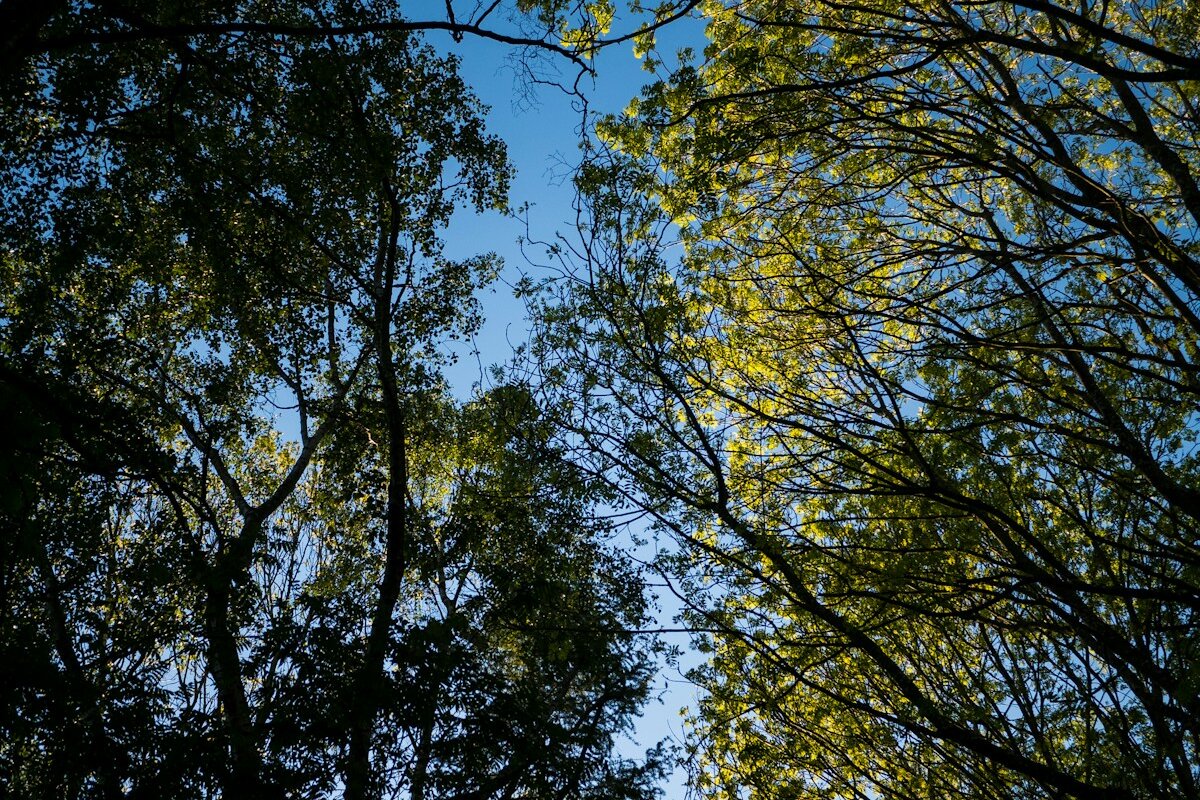
There’s a moment in late February — I don’t know the exact date because it’s different every year and also because I wasn’t really paying attention when it happened — when you step outside after work and something feels wrong. Wrong in a good way. It takes your brain a second to catch up with what your eyes are telling you.
The sun is still up. It’s five o’clock and the sun is still up.
I don’t know how to explain to someone who hasn’t lived through a Finnish winter just how profoundly this hits you. In December, Helsinki gets about six hours of daylight, and even that is generous — the sun barely crawls above the horizon before slinking back down like it changed its mind, casting the city in a permanent twilight that makes you feel like you’re living inside a particularly bleak Scandinavian crime drama. By January, your body clock is destroyed. You go to work in the dark, you come home in the dark, and the bit in between is a sort of grey suggestion of daytime that your vitamin D lamp tries valiantly to compensate for.
And then. And then. The light starts coming back.
The mathematics of hope
Here’s something that genuinely amazed me when I first learned it: in late February and March, Helsinki gains about five to six minutes of daylight every single day. Five to six minutes. That doesn’t sound like much until you do the maths — that’s over half an hour more daylight every week. In one month, you gain nearly two full hours of light.
The Finnish Meteorological Institute tracks all of this with the kind of meticulous precision you’d expect from a nation that takes its weather very seriously indeed. By the equinox in late March, Helsinki gets about 12 hours of daylight. By late April, it’s over 16 hours. By June — but let’s not get ahead of ourselves. We’re talking about spring, and spring is about the journey, not the destination.
The rate of change is what gets you. After months of darkness where the days barely seem to shift, where each morning feels exactly as dim as the last, suddenly it’s like someone is turning up a dimmer switch at visible speed. Every few days, you notice a difference. The light at breakfast is different from last week. The evening walk home is brighter than last month. One Tuesday you’re walking home in twilight. By Friday, you’re walking home in actual, honest-to-god sunshine.
It’s a slow-motion sunrise that lasts eight weeks, and it is magnificent.
The mood shift
I’ve never experienced anything quite like the collective mood transformation that happens in Finland when the light returns. It’s as if the entire country wakes up from hibernation simultaneously — which, honestly, isn’t far from the truth.
In winter, people are quiet. More inward. The buses are silent, the streets empty by 6pm, and social plans are made with the enthusiasm of someone agreeing to a dentist appointment. I’m not criticising — I do the same thing. The darkness gets into your bones and tells you to stay home, eat soup, watch a Nordic noir series on Yle Areena, and not talk to anyone unless absolutely necessary.
But in spring? People are outside. They’re sitting on benches, faces tilted toward the sun, eyes closed, absorbing every photon like solar panels that have been in storage for five months. The first time the temperature hits 5 degrees and there’s sunshine, Finns break out the t-shirts. I’ve seen people eating ice cream in March, breath still visible in the air, wearing nothing heavier than a hoodie, looking absolutely euphoric. In Birmingham, 5 degrees in sunshine would mean a fleece and a grumble. In Finland, 5 degrees in sunshine after a winter that spent time at minus 25 feels genuinely tropical.
There’s a word for the transitional state: “kevatvasymys,” which translates to “spring tiredness.” It’s a recognised phenomenon where your body, adjusting to the sudden increase in light after months of darkness, goes through a period of exhaustion. You’d think more light would mean more energy, but no — first, your body needs to recalibrate its circadian rhythm, its melatonin production, its entire relationship with the sun. Everyone is simultaneously happier and more exhausted. It’s very Finnish to have a specific word for this particular flavour of seasonal confusion.
The ice breaks
One of the most dramatic markers of spring in Finland is the ice breaking on the lakes and the sea. Throughout winter, the water has been frozen solid — people walk on the lakes, ski on them, fish through holes in them, and in some cases drive cars on them (there are actual ice roads in Lapland). The frozen water is not a curiosity; it’s infrastructure.
Then, gradually, the ice begins to weaken and crack.
The actual breakup of lake ice (called “jaidenlahtö”) is treated as a noteworthy event. People monitor it, talk about it, compare notes with neighbours. Some towns have informal competitions to guess the exact date the local lake will clear. It’s the kind of gentle, observational tradition that I’ve come to love about Finnish culture — paying close attention to the natural world not because you’re a nature enthusiast but because the natural world is right there, being dramatic, and you’d have to be deliberately ignoring it not to notice.
I watched this happen at Toolonlahti bay in central Helsinki during my first spring, and it was surprisingly moving. One week there was solid ice, the next there were dark patches of open water, and then one morning the ice was just gone and the ducks were back, paddling around like they’d never left, looking entirely pleased with themselves. The whole transformation took maybe two weeks. Winter was there, and then it wasn’t.
There’s something deeply satisfying about watching a frozen landscape return to motion. Water moves again. Streams trickle. The sound of the city changes as ice stops muffling everything. The world wakes up, and you wake up with it.
The first terraces
Finns have a relationship with outdoor terraces (terassit) that borders on obsession, and spring is when this obsession reaches its most fervent expression.
The moment the weather permits — and honestly, sometimes well before it permits in any reasonable assessment — every restaurant, bar, and cafe in Finland puts out chairs and tables on the pavement. Some throw down heat lamps and blankets. Others just put out chairs and let Darwin sort it out.
The first terrace days of spring are a cultural event. People will sit outside in 8-degree weather, wearing jackets and scarves and sometimes actual winter coats, nursing a beer or a coffee with an expression of determined, defiant joy. It doesn’t matter that it’s still cold enough to see your breath. What matters is that the sun is shining and they’re outside and it’s not December anymore and no one can take this from them.
I have fully embraced this tradition. My local pub opens its terrace in late March, and I am there on opening day every year, wrapped in layers, ordering a lager, pretending my fingers aren’t going numb around the glass. It feels like a victory. Over winter, over darkness, over the part of yourself that wanted to stay in bed until June. It is a victory, and it tastes like cold lager and sunshine.
The birds come back
This is something I didn’t expect to care about, and now I care about it more than I’m entirely comfortable admitting.
In winter, the bird population in southern Finland is relatively sparse — you’ve got your crows, your magpies, and maybe some brave tits (the bird kind, before anyone gets excited). The soundscape is muted. Finland’s winter silence is famous, and part of that silence is the absence of birdsong.
But in spring, the migratory birds return, and the soundscape changes completely.
The first time I heard a blackbird singing in late March — sitting on a rooftop aerial, absolutely belting out a song into the cold morning air — I stopped in the middle of the street. I hadn’t realised how much I’d missed birdsong until that moment. The winters are not just dark but quiet, and when the birds come back, it’s like someone switched the sound on again after months of mute.
By April, the dawn chorus is extraordinary. I’ve started leaving my bedroom window cracked open just to hear it in the early morning. The sound of birds in Finnish spring has a quality of celebration to it — they’re not just singing, they’re announcing. We’re back. We survived. Everything starts again.
Coming from a Brit who never gave birds a second thought back in England, this is quite the character development. Finland changes you.
Vappu: the spring eruption
If you want to see Finland at its most uncharacteristically, gloriously, spectacularly exuberant, come for Vappu — May Day, celebrated on the first of May but really getting going on the evening of April 30th.
Vappu is when Finland lets loose. Students and adults alike put on their white graduation caps (ylioppilaslakit — a tradition I find wonderfully charming), gather in parks, drink sparkling wine and sima (a traditional fermented lemon drink), eat munkki (doughnuts) and tippaleipa (a sort of funnel cake), and generally behave as if they’ve been released from captivity. Which, after the Finnish winter, they essentially have been.
The main event in Helsinki happens at Kaivopuisto park on May Day itself, and it’s a proper party. Families, students, elderly couples, children, dogs — everyone is there, having a picnic, wearing silly hats and overalls, and celebrating the arrival of spring with an enthusiasm that the rest of the Finnish year does absolutely nothing to prepare you for.
My first Vappu was a genuine revelation. I’d spent months thinking Finns were reserved, quiet, socially cautious people who valued personal space above all else. And then suddenly there were thousands of people in a park, singing and drinking and laughing and hugging strangers. “This is what we were saving our energy for,” my friend Antti told me, holding a glass of sparkling wine and grinning under his white cap. I think he was only half joking.
The Vappu eve tradition in Helsinki involves the statue of Havis Amanda (a mermaid fountain near the Market Square) being washed and given a student cap by engineering students. Thousands gather to watch. It’s silly and joyful and one of my favourite moments of the Finnish year.
What the light does to you
I want to try to describe what it actually feels like, this return of the light, because I think it’s the thing about living in Finland that’s hardest to convey to someone who hasn’t experienced it.
In December, you develop a kind of emotional callus. You accept the darkness. You buy a SAD lamp, you take your vitamin D supplements, you go to sauna, you drink coffee (so much coffee), you manage. And it’s fine. You cope. You even find beauty in the darkness — the blue-hour light of a Finnish winter afternoon is genuinely stunning. But you don’t realise how much of yourself you’ve packed away until the light starts to bring it back.
The first evening you walk home from work and the sky is pink and orange instead of black. The first Saturday morning when you wake up and the bedroom is genuinely bright. The first time you eat dinner by the window and you don’t need to turn the lights on. These tiny moments accumulate, and they crack something open inside you. Something you didn’t realise was closed.
By April, I am a different person from who I was in January. More social, more energetic, more inclined to say yes to things, more likely to suggest a walk or a bike ride or a trip to nowhere in particular. The Finns around me are the same way. The whole country lifts. Conversations get longer. Laughter gets easier. Plans get made. It’s not subtle — it’s a visible, tangible transformation that plays out over eight weeks across an entire nation of five and a half million people, and it never stops being remarkable.
This will be my fourth Finnish spring, and I already know it will floor me again. The anticipation is part of it now — I know what’s coming, and the knowledge makes it even sweeter. As I write this, the days are getting longer. I can feel the shift starting. The mornings are a shade brighter than they were last week. The evenings hold their light a few minutes longer.
It’s coming.
And somewhere in Helsinki, someone is already planning to open their terrace.