Surviving a Finnish Grocery Store
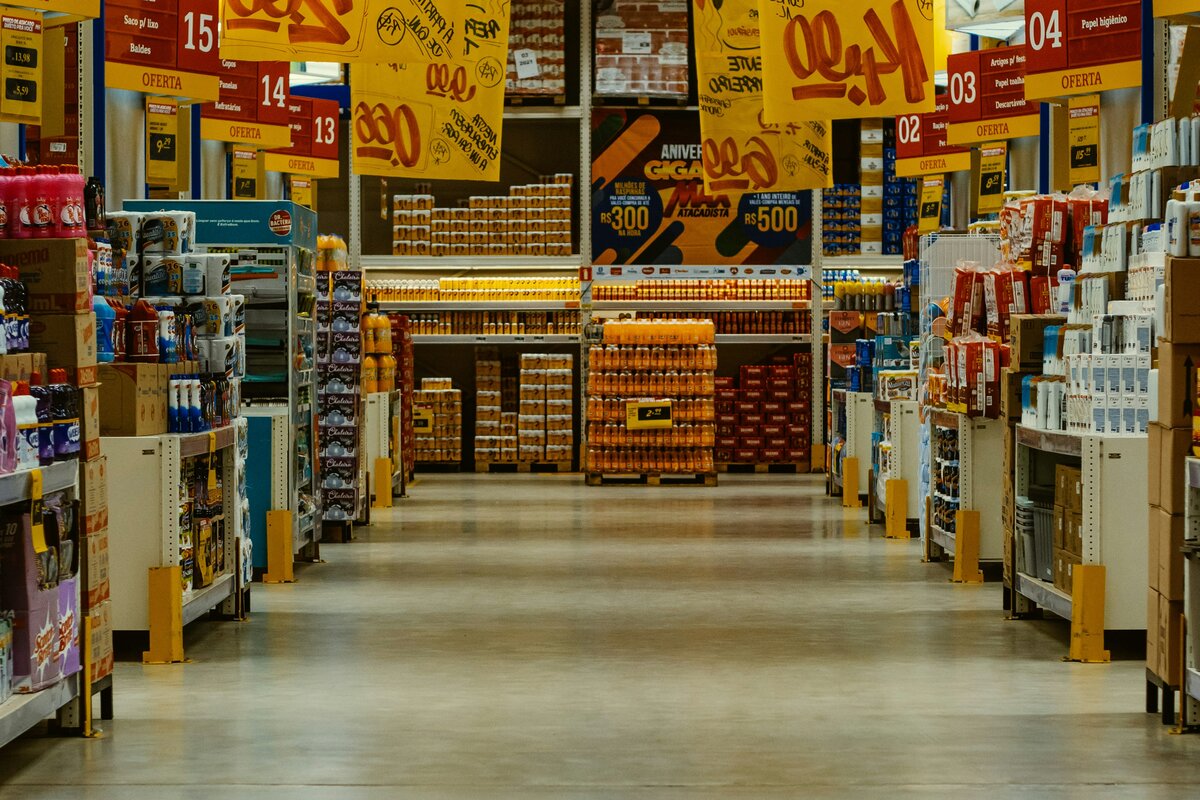
Let me tell you about the time I bought liver paste thinking it was peanut butter.
It was my second week in Finland. I was in an S-Market, tired, overwhelmed by the sheer foreignness of everything on the shelves. I saw a brown spread in a tube that looked vaguely like it could be peanut butter. The packaging was in Finnish. I didn’t have Google Translate on my phone yet. I thought, “How bad could it be?”
Reader, it was maksamakkara. Liver sausage spread. On toast. At breakfast. The taste still haunts me — not because it was terrible (it’s actually quite nice once you know what you’re eating), but because the shock of expecting peanut butter and getting liver is a sensory betrayal from which one does not fully recover.
That incident was my initiation into the wonderfully confusing world of Finnish grocery shopping. Three years later, I navigate these stores like a semi-competent local, and I want to share what I’ve learned so you don’t have to eat liver paste at 7am.
The great divide: S-Market vs K-Market
The first thing you need to understand about Finnish grocery shopping is that the entire country is essentially split into two tribes: S-Group people and K-Group people. It’s like Tesco vs Sainsbury’s, except with actual loyalty that would impress a football supporter.
The S-Group operates S-Market and Prisma (the big ones), and Alepa and Sale (the small convenience shops). They have the S-Etukortti, a bonus card that gives you cashback based on your monthly spending. You pick a “bonus level” by committing to spend a certain amount each month, and if you hit it, you get a percentage back. The system is genuinely clever — the more you consolidate your spending within the S-Group ecosystem (which includes petrol stations, hotels, and restaurants), the higher your cashback percentage climbs.
The K-Group has K-Citymarket (the big ones), K-Supermarket, and K-Market (the small ones). They have the Plussa card, which works on a points system that you can convert to discounts.
Most Finns have a clear allegiance. My neighbour Liisa is an S-Group loyalist who speaks of K-Market with the same tone my nan used to reserve for people who put milk in before the tea. When I mentioned I sometimes shop at both depending on which is closer, she looked at me like I’d confessed to a war crime.
“But your bonus,” she said, shaking her head. “You’re splitting your bonus.”
I have since consolidated. I am an S-Group man now. The cashback is genuinely useful — probably saves me 30-40 euros a month — and the sense of belonging to a tribe is strangely satisfying. My S-Etukortti is my most-used card.
The mystery products
Finnish grocery stores are full of products that will baffle anyone who didn’t grow up here. Here’s a survival guide to the ones that tripped me up the most.
Piima looks exactly like milk. Same carton shape, same shelf location, same general colour. It is not milk. It’s a fermented dairy drink, similar to buttermilk but tangier, and pouring it on cereal is an experience I would not wish on anyone who isn’t prepared for it. I made this mistake during my first week. My cereal was ruined. I was ruined. Piima goes in its own glass and you drink it straight, apparently. Many Finns love it. I am still working on this.
Viili is another fermented milk product, but this one has a stretchy, almost slimy texture that I can only describe as “what would happen if yoghurt and mozzarella had a baby.” Finns eat it with sugar and cinnamon for breakfast. I respect this tradition from a safe distance.
Mammi appears in shops around Easter and looks like something a cat has produced. I know this is rude but I need you to be prepared. It’s actually a traditional rye malt dessert that’s been made in Finland since at least the 1500s, and it tastes significantly better than it looks — sweet, earthy, and genuinely delicious with cream and sugar. You have to get past the visual, though. Give it a proper try with an open mind and a generous helping of cream.
Karjalanpiirakka (Karelian pies) are one of the best things in any Finnish grocery store and I will hear no arguments about this. Small oval pastries with a thin rye crust and rice porridge filling, they’re usually eaten with egg butter (munavoi) — a mixture of hard-boiled eggs and butter that sounds wrong and tastes completely right. Buy these immediately. They’re cheap, filling, endlessly satisfying, and available everywhere. I eat them at least three times a week.
Kalakukko is a bread loaf from the Savonia region, filled with fish (usually vendace or perch) and pork fat, then baked for hours. It sounds aggressively unusual described in English, but it’s actually quite good — the fish sort of melts into the bread during the long baking process. Think of it as Finland’s answer to a Cornish pasty, but with more cultural gravitas and less tourism.
Salmiakki is salty liquorice and it is absolutely everywhere. In chocolate, in ice cream, in vodka, in sweets, in coffee (probably). Finns are obsessed with it in a way that defies rational explanation. I’ve been told it’s an acquired taste. After three years of trying, I have acquired a mild tolerance, which my Finnish friends celebrate as if I’ve passed a citizenship test.
The self-checkout obsession
Finland might be the most self-checkout-obsessed nation on Earth, and I mean this as a compliment.
Walk into any S-Market or K-Supermarket and the staffed checkouts are near-deserted while orderly queues form at the self-service machines. Most stores have at least eight or ten self-checkout terminals, and some larger ones have even more. During off-peak hours, the staffed tills might not even be open.
I actually love this. The self-checkout machines are well-designed, fast, and — critically — they don’t shout “UNEXPECTED ITEM IN BAGGING AREA” at you like the ones in Tesco. They just work. You scan, you pay with contactless or chip, you leave. No small talk. No “do you have a loyalty card?” conversation (you just tap it at the start). Pure, efficient transaction.
There’s also a scan-as-you-shop system in some stores where you use a handheld scanner or your phone app to scan items as you put them in your bag. Then you just pay at a terminal and walk out. Random audits happen, but the whole system runs on trust. It’s very Finnish — the assumption is that you’re honest, and mostly everyone is.
The bag situation, though, took adjustment. You bring your own bags. Always. Plastic bags cost money (as they should), and forgetting your bags is a minor social sin that costs you both 30 cents and the silent judgement of everyone in your vicinity. I keep a stash of reusable bags by my front door and I still forget them roughly once a month.
The fresh bread section
If nothing else convinces you that Finland is a different country from the UK, the bread section will do it.
In England, bread means sliced white in a plastic bag. Maybe a sourdough if you’re at a posh shop. In Finland, bread is a serious national matter. The rye bread alone takes up an entire shelf — dark, dense, seeded, round, flat, with holes, without holes, soft, crunchy, sweet, sour. There is a rye bread for every occasion and every preference.
But the real revelation is the fresh bread section that most Finnish supermarkets have. Loaves come out warm throughout the day, and you grab one, put it in a paper bag, and weigh it. The fresh rye bread, still warm from the oven, with just a bit of butter — it’s one of life’s simple pleasures and it costs about two euros. I have genuinely rearranged my shopping schedule to coincide with when the fresh bread comes out at my local Alepa. This is what living abroad does to you.
There’s also a bread slicing machine where you can slice your own loaf to your preferred thickness. The first time I used it, I put the bread in at the wrong angle and it came out in wedges of wildly varying thickness. A Finnish grandmother watched this happen from three metres away without comment or expression. Her silence was a kindness I did not deserve.
Finnish bread also lasts remarkably well. A loaf of proper ruisleipa stays fresh in my bread bin for a week, easy. Coming from a country where sliced white develops mould if you look at it wrong, this feels like sorcery.
The alcohol rules
Coming from the UK, Finnish alcohol laws felt like stepping into a parallel universe. Here’s how it works.
Grocery stores can sell beer, cider, and other drinks up to 5.5% ABV. That’s it. Anything stronger — wine, spirits, stronger craft beers — can only be bought from Alko, the state-owned alcohol monopoly. Alko has its own shops with their own opening hours, and those hours are limited. Closed on Sundays. Closes at 8pm on weekdays. Closes at 6pm on Saturdays. If you want wine for your Saturday dinner and it’s 6:01pm, you are out of luck and full of regret.
The first time I wanted a bottle of wine for a Sunday evening dinner party and discovered this system, I nearly wept. Planning ahead is essential. Tuesday you, who remembers to buy wine at Alko, is doing a massive favour for Sunday you, who will otherwise be wandering the S-Market drinks aisle in vain, slowly coming to terms with the fact that 4.7% lager is the strongest option available.
Alko shops themselves are actually quite nice — well-organised, good selection, and the staff are knowledgeable and helpful. The prices are higher than the UK (Scandinavian alcohol taxes are no joke), but the quality of what’s available is good. I’ve discovered some excellent wines and craft beers through Alko that I’d never have found in a British supermarket.
Just remember: plan ahead. Your future self will thank you.
The conveyor belt checkout
If you do use a staffed checkout, you need to know about the conveyor belt system, because it is an experience.
You place your items on the belt, then put one of those plastic dividers down so the next person’s items don’t mix with yours. So far, so normal. The divider placement is taken seriously — failing to place one is a social offence on par with queue-jumping in England.
But here’s the Finnish twist: you pack your own bags. There is no one to help you. The cashier scans your items at a speed that suggests they’re being timed (and perhaps judged by an unseen panel), and the items pile up at the end of the belt while you frantically try to bag them. There is no slowing down. There is no mercy. There is no polite “take your time, love” from the cashier. They will simply keep scanning while maintaining steady eye contact, and the next customer’s items will begin advancing toward yours like a slow, inevitable tide.
My strategy: bring your own bags, open them beforehand (this saves critical seconds), put heavy items first, and accept that you will never be as fast as the cashier. No one is. It’s not a competition you can win. It’s a competition you can only lose with varying degrees of grace.
The seasonal surprises
Finnish grocery stores change dramatically with the seasons in a way that British supermarkets really don’t.
In summer, there are fresh Finnish strawberries (mansikka) that are ludicrously good — small, sweet, intensely flavoured, and nothing like the watery giants from Spain that fill Tesco shelves year-round. The new potato season (varhaispottuja) in early summer is treated with something approaching religious reverence. People have opinions about which farm’s potatoes are best. These are conversations that happen in real life, between real adults, with genuine passion.
Autumn brings mushrooms and berries. You’ll see buckets of lingonberries and chanterelle mushrooms that people have foraged themselves, sold at market stalls outside supermarkets. The Finnish everyman’s rights allow anyone to pick berries and mushrooms freely in nature, and many Finns take this very seriously — freezers across the country are stocked with hand-picked blueberries and lingonberries that will last through winter.
Christmas brings its own delightful collection of seasonal items — gingerbread biscuits (piparkakut), joulutorttu (star-shaped Christmas pastries filled with plum jam), and a frankly alarming quantity of chocolate. The Christmas confectionery aisle in a Finnish supermarket in December is not for the faint of heart or the weak of willpower.
I’ve grown to love this seasonality. In the UK, you can buy strawberries in January because they’ve been flown in from another hemisphere. In Finland, you eat what’s in season, and it’s always better for it. When the first Finnish strawberries appear in June, it feels like an event. Because it is.
The prices
Finnish groceries are more expensive than the UK. That’s the blunt truth, and there’s no way around it. Fresh vegetables, meat, and dairy cost more — though the quality, particularly of dairy products, is also noticeably higher. A block of Finnish butter is a life-changing experience after years of standard supermarket butter back home. Finnish milk tastes different, better, and once you’ve had it, going back feels like a downgrade.
The loyalty cards help. My S-Etukortti cashback genuinely makes a difference over the course of a month. The discounted “last day” items (marked with orange stickers showing -30% or -60%) are also worth watching for — I’ve picked up excellent cuts of meat and fresh fish at significant discounts just by timing my shopping right.
My monthly grocery bill for one person hovers around 300-350 euros, which is more than I spent in Birmingham but not outrageously so. Cooking at home is, as everywhere, dramatically cheaper than eating out, and Finnish grocery stores give you genuinely excellent ingredients to work with. The produce is fresh, the dairy is superb, and the rye bread alone justifies the cost of living.
The bottom line
Finnish grocery stores are brilliant once you crack the code. The quality of the food is high, the stores are clean and well-organised, the self-checkout systems actually work without screaming at you, and the seasonal products keep things interesting year-round.
You’ll make mistakes — the liver paste incident was not my last moment of grocery-related confusion, and I’m sure it won’t be yours either. But that’s part of the adventure of living somewhere new. Every mystery product is a story, every mistranslation is a lesson, and every successfully navigated shopping trip is a small victory.
Get a loyalty card. Learn to read the basic Finnish product names (Google Lens is your friend for the first few months). Embrace rye bread with the fervour it deserves. Try the karjalanpiirakka. And whatever you do, check the label before you buy anything in a tube.